2025 Rule 5 Draft Analysis and Update
As Jay Z famously says… Allow me to introduce myself..
I’ve spent years mostly observing and at times commenting on social media content, but now I’m ready to drive the conversation.
My background? Over 30 years as an MLB Scout covering amateur, professional, international and advance scouting. Each area has its own nuances, and I’ve lived them all.
Outside of Baseball, I have studied and am educated in International Relations, Political Science, Business management, along with Health and Physical Education. I’m a lifelong history buff especially when it comes to baseball, world history and cultural movements. As an engaged observer, I also love talking about what’s happening in the world today.
Moving forward, I’ll be sharing insights on any (or all) of these topics.
I know at first most readers will not be familiar with many inside baseball terms, statistics or metrics but I will attempt to explain them in the near future so the casual fan will understand the ones I use for deeper insights.
So, here’s my first original post: after watching Spring Training games, reviewing video and diving into both traditional and advanced stats. I’m looking at players taken in the Major League Phase of the 2025 Rule 5 draft. What teams saw in them and what they were really hoping to get long term.
Let’s go.⚾
2025 MLB Rule 5 Draft (Major League Phase) Update and Player Overview
This draft was overwhelmingly Right handed pitcher-heavy (12 RHPs + 1 catcher), showing teams were searching for affordable, high-upside bullpen and back-end rotation depth from unprotected upper-minors arms. Most selections targeted pitchers with at least one plus tool (velocity, swing-and-miss slider/curve, or elite command) that could be maximized in relief roles, there were also some injury-recovery or command-improvement bets. The lone position player highlighted catching scarcity and defensive value paired with his offensive improvement.
The results thus far show the peril of being overly analytical in your scouting. Many of the greatest player skillsets never find consistency, are yet to be fully developed or encounter mental barriers along the way.
1. RJ Petit, RHP (Rockies, from Tigers)
6’8”, 300-lb works downhill with a 2.44 ERA, strong strikeouts, and a diving 83–85 mph slider.
Casual comp: In terms of arsenal and role, Petit has been compared to power arms who can generate ground balls and strike out batters. He draws comps to other relief pitchers with similar profiles, such as Fernando Cruz. Matt Svanson and Sean Newcomb.
Why the metrics click: Low FIP(Fielding independent pitching) and suppressed BABIP(Batting average on balls in play) prove the ERA(Earned run average)is real (slider + groundballs doing the work). High K% shows effective swing-and-miss. He throws strikes and had 1.16 WHIP(Walks and Hits Innings pitched) last season which is consistent across his career
Quick take: Multi-inning type that with traits for success at altitude in Coors Field if he continues to throw strikes similar to the minor league rate.
Scouting note: Rockies loved the huge frame, downhill plane, and slider that should play at altitude.
*”The Rockies took Petit with the very first pick in the Rule 5 draft but he required Tommy John surgery a couple of weeks ago. He has already been placed on the 60-day injured list and will stay there for the entire season. There’s no IL in the offseason, so the Rockies will have to put him back on the 40-man if they plan to carry him into the 2027 season. As mentioned up top, the Rule 5 restrictions would carry over until Petit has been active for 90 days.”
2. Jedixson Paez, RHP (White Sox, from Red Sox)
Undersized 21-year-old command specialist with plus slider/change and very low walks.
Casual comp: Not as stocky or strong but has similar stuff to Marcus Stroman, Paez thrives on inducing soft contact and commands a full arsenal of pitches, including a sharp curveball and a changeup.
Why the metrics click: Elite walk rate + solid K% = means he is beating hitters in the zone. Clean FIP even after calf injury highlights his real command skill.
Quick take: Back-end starter or versatile high-leverage arm once durability improves.
Scouting note: White Sox bet on command and secondary stuff for upside in a system that lacks pitching depth
*The White Sox took Páez with the second pick in the Rule 5 draft. It was going to be a challenge for him to stick with Chicago as he had never pitched at Triple-A or even at the Double-A level. The White Sox broke camp with him but it wasn’t to be. He made three appearances, allowing six earned runs without striking out a batter.(Returned to Boston after 3 Major League Appearances)
3. Griff McGarry, RHP (Nationals, from Phillies)
High-velocity arm with improved (but still walk-prone) command and a wipeout slider.
Casual comp: Lucas Sims: A “stuff-first” reliever who misses a significant amount of bats but struggles with consistent strike-throwing, making him a high-leverage arm who can occasionally be volatile
Why the metrics click: High K% from velo + slider is legit; walks are the main thing holding back shutdown potential per FIP/BABIP.
Quick take: As a scout the upside is attractive. You always think he is one mechanical tweak from being an immediate back end reliever; but right now up-and-down depth at best.
Scouting note: Nationals targeted the stuff + recent control gains for bullpen help.
**The Nationals took a chance on him but the wildness remained. He faced 27 batters in spring training and walked five of them, an 18.5% clip that’s about double league average. He also hit one more guy, meaning he gave a free pass to first to 22.2% of the opponents he faced in spring. He didn’t break camp, cleared waivers and was returned to the Phils a bit before Opening Day.
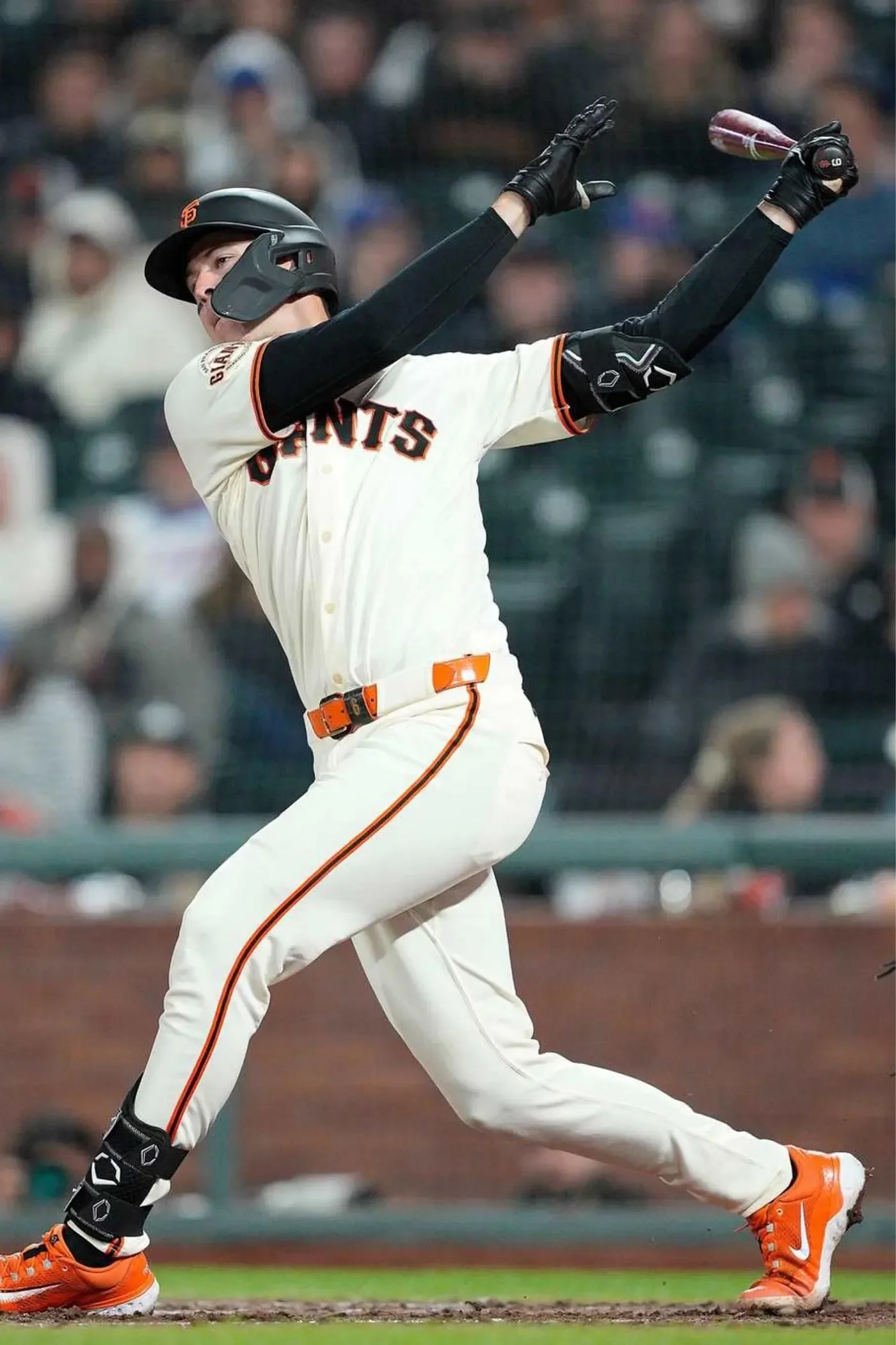
4. Daniel Susac, C (Giants, from Twins via Athletics)
Only position player taken — 2025 power surge (.311 BA, 18-HR pace, strong OBP/SLG) with strong defense.
Casual comp: Sam Huff (Power/Body Comparison): Both are large-framed catchers (6'4"+) with significant pull-side power. Susac is considered a better pure receiver than the typical “big” catcher, but the offensive power profile is similar.
Danny Jansen (Developmental Comparison): A solid, dependable catcher who can deliver average to above-average offensive production
Why the metrics click: Elevated wRC+ and better exit velo prove the power is sustainable skill, not BABIP luck.
Quick take: Everyday backup with pop and upside as a potential starter, with 3rd catcher floor.
Scouting note: Giants valued the defensive skills plus the bat improvement for a backup role.
** He has performed well since joining his new organization. He hit .350/.386/.550 in spring training and his big league career is off to a good start so far
5. Carter Baumler, RHP (Rangers, from Orioles via Pirates)
Post-injury breakout: 2.04 ERA, 46 K in 39⅔ IP, upper-90s FB + nasty 12–6 curve.
Casual comp: Based on his transition from a starting pitcher prospect to a reliever with high-strikeout potential following Tommy John surgery, a realistic comparison for Baumler is a versatile, mid-leverage reliever with potential for higher usage, similar to pitchers like Will Klein or Ryan Walker.
Why the metrics click: Chase/miss rates and strong FIP show dominance is real; vertical movement drives the strikeouts.
Quick take: High-leverage upside if healthy classic injury-history rollercoaster.
Scouting note: Rangers liked the resurgent velocity and analytics traits after his health returned.
**He earned an Opening Day job with a strong spring, throwing 9 1/3 scoreless innings with ten strikeouts and just two walks. He has thrown 4 2/3 big league innings thus far, with two earned runs allowed. He has five punchouts but has given out six walks and hit one batter. The Rangers don’t have a ton of flexibility in their bullpen. But he must improve his command
6.Ryan Watson, RHP (Red Sox, from Athletics via Giants)
Triple-A reliever: ~27% K rate, low walks, “death-ball” low-spin slider + 93–96 mph FB with huge extension.
Casual comps: Garrett Whitlock Like Whitlock, Watson was a Rule 5 pick recognized for having “stuff” that plays up due to unique metrics (extension and release height) rather than pure velocity.Josh Winckowski: Similar to Winckowski, Watson has the ability to pitch multiple innings, has a solid good fastball (93–95 mph, tops 96) and a swing and miss slider
Why the metrics click: High K% and clean FIP confirm swing-and-miss from pitch design.
Quick take: Reliable middle-relief lock with one elite pitch.
Scouting note: Slider miss rate and control stood out.
**He didn’t have an overwhelming spring performance, tossing 11 1/3 innings, allowing seven earned runs with seven strikeouts. He broke camp with the Sox regardless and has made two big league appearances thus far. He has allowed two earned runs in 3 2/3 innings with three
7. Matt Pushard, RHP (Cardinals, from Marlins)
Projects as a high-whiff rate reliever (approaching 34% in 2025) who can generate soft contact and neutralize hitters from both sides of the plate, functioning as a high-upside bullpen piece.
Casual comp: Greg Weissert (BOS): Similar projection for 2026, working as a durable, non-closing middle reliever with high-leverage potential.
Why the metrics click: Low walks + high GB% make his numbers sustainable without big strikeouts.
Quick take: Low-leverage but has valuable versatility for long relief or spot starts.
Scouting note: Cardinals targeted simple strike-throwing and groundball ability.
**Pushard landed on the 15-day injured list earlier this week due to right knee patellar tendinitis. His timeline is unclear but there’s nothing to indicate the Cards expect a lengthy absence. Last year, he posted a 3.61 ERA in 62 1/3 Triple-A innings, with a 28.5% strikeout rate, 9% walk rate and 43% ground ball rate. He had a solid spring, tossing 8 2/3 innings with three earned runs allowed, nine strikeouts and two walks. He made one regular season appearance before landing on the IL, allowing three earned runs in one inning of work.
8. Roddery Muñoz, RHP (Astros, from Reds)
Ex-MLB starter now in bullpen with added velo and a 90+ mph wipeout slider, but command still spotty.
Casual comp: Yennier Cano, Muñoz relies on elite velocity and breaking ball movement to bridge the gap in control issues, making him a high-risk, high-reward option in the middle-to-late innings
Why the metrics click: Slider whiff rates are huge; FIP shows talent if walks improve.
Quick take: High-leverage potential if control clicks; otherwise stuff-over-command ride.
Scouting note: Astros bet on the velocity jump and slider leap.
**Muñoz had a strong spring, with 16 strikeouts and two walks in 10 innings, though he allowed five earned runs. His two regular season appearances haven’t been as smooth. He does have four strikeouts in 2 2/3 innings but has also walked four and thrown two wild pitches. Overall, he has a 6.73 ERA in 96 1/3 career innings.
9. Peyton Pallette, RHP (Guardians, from White Sox)
Post-TJ arm bouncing back with 94–97 mph FB + slider in Triple-A relief.
Casual comp: Trevor Stephan Both pitchers feature a sharp breaking ball as a primary secondary weapon and rely on power pitching to get swings and misses.
Why the metrics click: Velo and spin metrics confirm the stuff has returned.
Quick take: Reliever upside with health as the only question mark.
Scouting note: Guardians liked the post-TJ stuff rebound.
** The Guardians brought him into camp and he performed well, firing six scoreless innings with 11 strikeouts and three walks. He broke camp and has made two big league appearances thus far, tossing 3 2/3 innings with one earned run allowed. He has struck out three with just one walk, but has also hit a batter and thrown a wild pitch.
10. Spencer Miles, RHP (Blue Jays, from Giants)
Mid-90s FB + breaking ball — steady upper-minors utility arm. His data indicates a high-strikeout (8.92 K/9) but high-walk potential, making him a volatile but high-ceiling pitcher.
Casual comp: Caleb Killian Both pitchers feature a sharp breaking ball as a primary secondary weapon and rely on power pitching to get swings and misses.
Why the metrics click: Balanced metrics show reliable, repeatable innings with no extreme luck.
Quick take: Ready made depth piece if healthy
Scouting note: History of back issues and Tommy John surgery, combined with a max effort delivery, he is frequently compared to power relievers or starters who could be described as injury-prone.
** Miles earned a spot with a decent spring. He tossed 9 2/3 innings, allowing four earned runs with 11 strikeouts against five walks. His major league debut was great. On Saturday, he was put into a tied game in the 11th inning. Despite starting with a runner on second, he put up a zero and got the win when the Jays walked it off in the bottom of the frame. His next appearance wasn’t as storybook, as he allowed the Rockies to score three times in an inning and a third.
11. Cade Winquest, RHP (Yankees, from Cardinals)
High-K arm (110 K in 106 IP) with a standout curveball.
Casual comp: Mitch Spence a versatile arm who can provide depth in the bullpen or make a spot start.
Why the metrics click: High K/9 and curve metrics prove strikeouts are pitch-driven.
Quick take: Back-end starter or high-K reliever potential. His realistic ceiling is a reliable back-end bullpen arm (middle reliever)
Scouting note: Breaking ball action was a key draw.
** He didn’t have a dominant spring. He tossed 10 innings, allowing eight earned runs with eight strikeouts. He walked four opponents, hit one more and threw one wild pitch. He broke camp with the club but still hasn’t made his major league debut.
12. Zach McCambley, RHP (Phillies, from Marlins)
4.06 ERA but .191 opponent AVG, 94–96 mph FB + high-spin breakers with 50%+ whiff rates.
Casual comp: He fits the profile of pitchers like Max Lazar, Carlos Hernandez, or Jose Ruiz — relievers who can fill out a bullpen, providing a high-spin slider/cutter mix.
Why the metrics click: Elite whiff rates and FIP show the low batting average is real skill.
Quick take: Setup upside with those swing-and-miss numbers.
Scouting note: Whiff rates on the breaking balls stood out.
** The Phils brought him into camp and he only allowed one earned run in 7 1/3 innings, but he gave out six walks while only striking out four. He cleared waivers and was returned to the Marlins before Opening Day.
13. Alexander Alberto, RHP (White Sox — Round 2, from Rays)
Huge 6’8” power arm: 96–98 mph (touches 101) cutter-FB + sweeping slider its raw but electric.
Casual comp: Scott Barlow. Like Barlow, Alberto relies on a dominant 70 fastball that hits 101 mph combined with a sweeping slider but with below average command
Why the metrics click: Raw velocity and pitch shape to slider say he has high-leverage ceiling.
Quick take: Closer upside if body and strikes come together; intriguing raw depth floor.
Scouting note: White Sox took a raw power arm with upside as a potential closer if all comes together but it could take time
** Alberto tossed 6 2/3 spring innings for the Sox, allowing eight earned runs while striking out seven and walking four. He was put on waivers in mid-March, well before Opening Day, and was given back to the Rays.
Key Takeaway — What Teams Were Valuing
Teams prioritized cost-controlled pitching depth with at least one standout tool: high strikeout stuff (especially sliders/curves with high whiff rates), velocity, or elite command/projectable command. Many picks were injury-recovery or “stuff-over-command” bets that could be simplified in relief roles. The draft favored repeatable skills that translate quickly to the majors (K%, pitch design, groundballs) over raw projection stars. Susac was the rare position-player nod to defensive reliability + improved bat. Overall, this was a pragmatic draft for bullpen help and low-risk organizational pieces rather than future stars. Most have middle-relief or back-end ceilings, with floors of minor-league depth or DFA risk if command/health doesn’t hold.
**Updates from Darragh McDonald-MLB Trade Rumors
#MLB #Baseball #Rule5draft #RuleV
