Nationals: Enviable depth
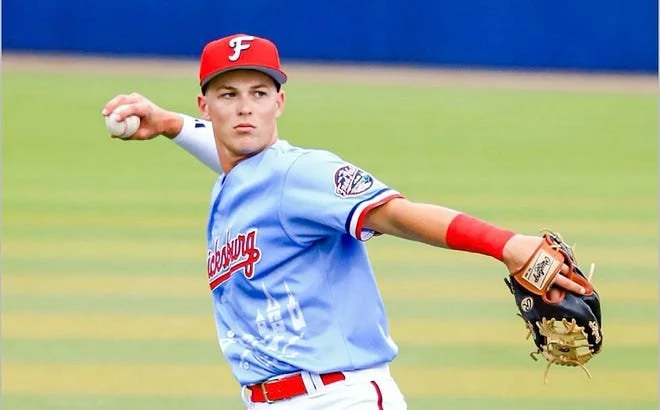

Nationals: A wealth of Middle Infielders in the future will make for some interesting decisions.
A couple of nice trades and the first pick of the draft in 2025 have contributed to the Washington Nationals enviable infield minor league middle infield depth. Looking at a 2028–2030 Window, here are some names that will figure heavily into their future thinking.
Eli Willits
Eli Willits was born in Lawton, Oklahoma, and is the son of former MLB outfielder Reggie Willits. A 6’1”, 180-pound switch-hitter who throws right-handed, Eli has consistently shown a driven mindset by seeking out tougher competition. He reclassified to the 2025 draft class, somewhat similar to Bryce Harper, and was selected first overall by the Washington Nationals. He signed for $8.2 million out of Fort Cobb-Broxton High School, becoming the youngest No. 1 overall pick in MLB draft history at age 17.
In 2026, the 18-year-old has performed steadily at Single-A Fredericksburg, batting .290/.405/.481 with 6 home runs, 36 RBIs, and 28 stolen bases across 42 games and 208 plate appearances (.886 OPS). After missing some early time with minor back tightness, he has displayed excellent plate discipline. While his 54 strikeouts (roughly a 20–23% rate) raise a mild concern, they are offset by his strong .405 on-base percentage. Competing in the Carolina League as a traditional high school senior age — nearly 2.5 years younger than the league average, makes this a very impressive showing against quality competition.
Willits has a compact, efficient swing from both sides of the plate. His short, direct path to the ball, outstanding bat control, and flat, line-drive plane allow him to stay inside the ball, he excels at opposite-field contact, and barrels fastballs with a smoothly. With minimal wasted movement and excellent body control, he makes mid-swing adjustments while staying balanced. These abilities, combined with advanced strike-zone discipline and low swing-and-miss rates, explain why evaluators are so convicted about his hit tool.
Major League Comparison
Eli projects as a switch-hitting Trea Turner type. He will blend plus speed, high-contact switch-hitting, and above-average shortstop defense. Like Turner, he has the athleticism to become a dynamic leadoff hitter who steals 30+ bases and hits around .300 with a high on-base percentage. While he is unlikely to match Turner’s peak power (26 — 28 home runs), his tools, athleticism, and skill set support a strong floor of a consistent .290/.370/.460 line with 15 — 18 home runs and 30 stolen bases as an All-Star leadoff shortstop.
Primary Weakness and Development Path
Willits’ main limitation is currently fair-to-fringe-average raw power. His lean frame and contact-oriented swing produce more gap power than consistent lift, with peak exit velocities typically in the mid-to-high 90s mph.
To unlock more power, he needs to focus on:
- Physical Development: Strength training targeting lower-body explosiveness, core strength, and rotational power.
- Swing Adjustments: Slightly raising his launch angle on driveable pitches while keeping the swing compact.
- Approach Refinement: Selectively hunting pitches he can elevate and pull with authority.
- If successful, he could reach 15 — 20 home runs per season while maintaining his high-contact, high-OBP profile.
Amateur scouts I have spoken to who have seen him most, frequently praised his maturity, outstanding work ethic, plus speed, easy hands, range, and solid arm at shortstop. He is widely viewed as a potential Gold Glove shortstop with five-tool upside.
Projection: Everyday shortstop and table-setter with All-Star leadoff potential. High floor built on defense, contact, and speed; ceiling as a franchise cornerstone. Expected MLB arrival: 2028 — 2029.
Scouting Tools
- Speed (Home-to-First): Elite runner. Averages 4.08 — 4.12 seconds from the right side and 3.95 — 4.00 from the left (well above average for a switch-hitter). This has fueled his 28 stolen bases in just 42 games. 60/60
- Projected Batting Average: .290 — .315 at maturity. Elite bat-to-ball skills and plate discipline give him one of the highest hit-tool projections in the minors. 30/70
- Home Run Potential: 15 — 20 per year at peak. Power is average at best now, but strength gains and swing tweaks could push him to 18 — 22 home runs and 40+ doubles. Like Turner, he is likely to overperform his raw power thanks to consistent hard contact. 30/55
Devin Fitz-Gerald
Devin Fitz-Gerald was born on August 17, 2005, in Boca Raton, Florida. The 5’10”, 185-pound switch-hitter (throws right-handed) was drafted in the fifth round (165th overall) by the Texas Rangers in 2024 out of Marjory Stoneman Douglas High School. He was acquired by the Nationals in the January 2026 trade for MacKenzie Gore.
At High-A Wilmington in 2026, the 20-year-old has broken out. In 49 games and 223 plate appearances, he is hitting. .275/.383/.549 with 12 home runs, 36 RBIs, 11 stolen bases, and a .932 OPS. He has already had multiple homerun game them from each side of the plate, while showing strong plate discipline in a challenging assignment.
Fitz-Gerald possesses an aggressive swing with natural loft. He generates hard contact using a slight uppercut path, good extension through the ball, and solid balance from both sides. A leg-kick or weight-shift trigger helps him produce surprising power for his size, especially to his pull side.
Major League Comparison
Devin’s profile closely resembles switch-hitting Ozzie Albies. Like Albies, he is a smaller but explosive switch-hitter with legitimate plus power, good bat speed, and the ability to drive the ball from both sides. He projects as a high-OBP infielder capable of hitting 25+ home runs while playing solid defense at second base. He currently shows more natural power than Albies did at the same age and could settle in as a steady .280/.360/.480 — .500 middle-of-the-order (likely 5 or 6 hole) bat.
Primary Weaknesses and Development Path
Key areas for growth include defensive limitations and swing consistency. At shortstop, he has average-to-fringe arm strength and range, and will be a better long-term fit at second base. Offensively, he can become pull-happy or expand the zone when chasing home runs.
To maximize his potential, he is working on:
- Swing/Power Optimization: Refining his left-handed swing for greater consistency and a better all-fields approach.
- • Defense and Versatility: Long-toss work, shoulder strengthening, and gaining experience at multiple positions.
- • Strength Training: Building to support sustained power output.
Projection: Versatile infielder or everyday second baseman, driven primarily by his bat. Ceiling as an above-average regular or All-Star hitter; floor as a solid platoon or utility player. Expected MLB timeline: 2028 — 2030.
Scouting Tools
- Speed (Home-to-First): Below-plus runner. Averages 4.28 — 4.35 seconds from the right side and 4.18 — 4.25 from the left. Speed is playable but not a major weapon (reflected in his 11 stolen bases). 50/45
- Projected Batting Average: .275 — .295 at maturity. Strong bat speed and loft support good contact, though swing-and-miss will likely keep his average below elite levels. 30/55
- Home Run Potential: 20 — 25+ per year at peak. Already displaying plus raw power for his size. With improved consistency and pull-side leverage, he has a realistic path to 25-home-run seasons. 40/55 future.
Ronny Cruz
Ronny Cruz was born on August 24, 2006, in Santo Domingo, Dominican Republic. The 6’2”, 170-pound right-handed hitting and throwing shortstop was originally drafted in the third round (90th overall) by the Chicago Cubs in 2024 out of Miami Christian High School in Florida. He signed for $620,000. The Nationals acquired him in July 2025 as part of the trade that sent right-hander Michael Soroka to the Cubs.
At age 19 in 2026, Cruz has impressed starting the season at Single-A Fredericksburg before a quick promotion to High-A Wilmington. Through approximately 50 games and 219 plate appearances across both levels, he is hitting around .242/.324/.412 with 7 home runs, 27 RBIs, and 20 stolen bases (overall OPS .737). Earlier in the season at Low-A, he hit for a 333/.460/.627 slash with 3 homers and strong stolen base success(15/18) before making the jump; results have been more mixed at High-A Wilmington against tougher pitching. He has cooled off , but he continues to show power and speed flashes.
Cruz has a projectable frame with significant room to add strength. He shows plus raw power in batting practice and games, generating hard contact with natural loft and pull-side leverage, though his swing can get long and pull-heavy with some aggressiveness leading to swing-and-miss. Defensively, he has the athleticism, range, and good arm strength to stick at shortstop (with added versatility across the infield), though consistency and his footwork need refinement as he matures.
Major League Comparison
Ronny projects as a high-upside right-handed hitting shortstop. In a best case scenario he parallels Alfonso Soriano. He has the explosiveness to develop into a 25+ home run, 30+ stolen base threat with solid defense, though his hit tool will determine whether he becomes an everyday regular or a high-variance power bat.
Primary Weaknesses and Development Path
Cruz’s main challenges are swing consistency, plate discipline, and contact rates. He is a tough guy to walk(5.3% walk rate last season, but it’s improved to about 9% currently). He can be overly aggressive, expanding the zone and struggling with off-speed pitches, which has led to higher strikeout rates in tougher environments.
To maximize his potential his focus areas would be.
- Swing Refinement: Shortening the path, improving lower-half direction, and developing a more consistent all-fields approach to reduce pull-side tendencies and swing-and-miss.
- Physical Development: Adding functional strength to his slender frame to support power without sacrificing speed or athleticism.
- Approach and Defense: Improving pitch recognition, incorporating more selective aggression, and polishing footwork/range at shortstop through reps and coaching.
Projection: Everyday shortstop or versatile infielder with power and speed. Ceiling as an impact player and potential All-Star if the hit tool progresses; floor as a power-oriented utility or platoon bat due to contact risk. Expected MLB timeline: 2028 — 2030.
Scouting Tools
- Speed (Home-to-First): Good runner 4.1–4.2 with good instincts on the bases. Projects as a 25 — 35 steal threat annually. Run 60/60
- Projected Batting Average: .240 — .249 at maturity. Raw athleticism and power are strengths, but hit tool and approach lags behind and will require significant development. Ability to hit for average 20/45
- Home Run Potential: 20 — 30+ per year at his peak. Already showing plus raw power that should grow with strength and swing tweaks. Raw Power 55/60.
Overall Comparison and Ranking of the Three Prospects
Eli Willits, Devin Fitz-Gerald, and Ronny Cruz represent a talented young infield group for the Nationals, each with distinct profiles. Willits offers the highest floor and premium shortstop athleticism with elite contact and speed.
Fitz-Gerald brings the most advanced offensive polish and power right now. Cruz provides the biggest raw tools and highest variance upside as a power-speed shortstop.
Ranking the Three Prospects (as of mid-2026)
- Major League Impact (Ceiling + Likelihood of Significant Contribution)
- 1. Eli Willits — Highest overall floor and well-rounded five-tool potential at a premium position. Elite contact, speed, and defense give him the most reliable path to stardom as a leadoff shortstop.
- 2. Ronny Cruz — Highest raw upside with power, speed, arm, and athleticism. Boom potential is massive if contact improves, but higher risk of falling short.
- 3. Devin Fitz-Gerald — Strong bat with legitimate power, but position and defensive fit may cap his overall impact compared to the two shortstops.
- 2. Role/Risk
- 1. Eli Willits (Lowest Risk) — Advanced approach, youth, and defensive skills provide a very high probability of at least a solid everyday role.
- 2. Devin Fitz-Gerald (Moderate Risk) — More polished offensively and already performing at High-A, but defensive limitations add some positional risk.
- 3. Ronny Cruz (Highest Risk) — Significant swing-and-miss and approach concerns create boom-or-bust characteristics typical of high-tools international/high school prospects.
- 3. Value
- 1. Eli Willits — Premium draft pedigree, youth, and well-rounded profile make him the highest-value prospect long-term (potential franchise cornerstone).
- 2. Ronny Cruz — High-upside acquisition with cost-controlled years ahead; his tools could yield massive surplus value if he hits.
- 3. Devin Fitz-Gerald — Valuable trade acquisition with a quicker potential path to contributing, but slightly lower ceiling than the others.
These three complement each other nicely and could anchor the Nationals’ infield for years to come. Willits sets the standard for consistency, while Fitz-Gerald and Cruz add power and excitement. The Nationals have depth and potentially some interesting Middle Infield options in the not so distant future. Looking closely at their system. I would anticipate they will go heavy identifying young pitching(especially Left-handed) both in the draft and in trades for the next couple of seasons.
