Sade: The Mysterious and Reluctant Icon
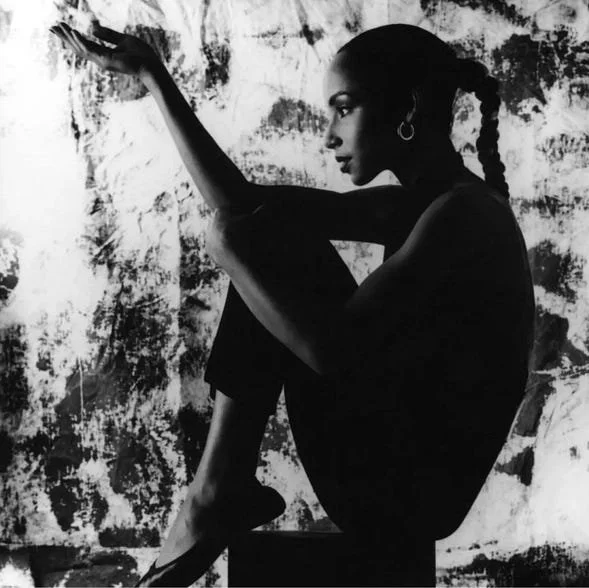

In the ancient city of Ibadan, Nigeria, on the sixteenth day of January in the year 1959, a daughter was born to Adebisi “Bisi” Adu and Anne Hayes. They named her Helen Folasade Adu. Among the Yoruba people, names are prayers and prophecies, and Folasade carried the weight of one: “honour confers your crown” or “crowned with wealth.” It was a name that would come to define a woman whose quiet elegance and integrity would crown her as one of the most enduring and respected voices in the world of soul, jazz, rhythm and blues.
Her father, a Nigerian professor of economics from the proud Yoruba lineage of Ikere-Ekiti a city that is approximately five hours northeast of Lagos by car, met her mother, an English nurse, on a London street. They married in 1955 and soon moved to Africa to build a life in Nigeria. But when little Folasade was only four years old, they would divorce. As a result, her mother took her and her older brother, Banji, and returned across the ocean to England. They first settled with her maternal grandparents near Colchester in Essex, then moved to the seaside town of Holland-on-Sea. Where Sade attended Clacton County High School. The girl who carried Africa in her blood and England in her upbringing learned early about the art of walking between two worlds.
As a young woman, she made her way to London and enrolled at Central Saint Martins College of Art and Design, where she studied fashion design. Before the music claimed her, she worked as a menswear designer and part-time model. Yet destiny, as it so often does, arrived unannounced. Friends from her school days invited her to lend her voice to a funk band called “Arriva”. The experience stirred something deep within her. Later, she was persuaded to join a larger group known as “Pride” in the early 1980s. It was there that a jazzy song she co-wrote, “Smooth Operator,” began to create buzz in the offices of record executives. They wanted the vocalist as a solo artist. But Sade, loyalty being her trademark, refused to leave her bandmates behind. Guitarist and saxophonist Stuart Matthewman, keyboardist Andrew Hale, and bassist Paul Spencer Denman came with her. In that act of solidarity, the band “Sade” was born.

From her earliest years, music had spoken to her soul. Growing up, she went deep into the well of 1970s American soul. Curtis Mayfield’s fire, Donny Hathaway’s heartbreak, Bill Withers’ plain stated wisdom, the passion of Al Green, and the velvet smooth sound of Marvin Gaye were her favorites. Around the age of twelve, she began seeking music of real substance, voices that matched the emerging depth within her own spirit. Her own singing smooth, understated, emotionally direct had the warmth of those influences while creating something entirely her own: a sound both sophisticated and intimate, rooted in heritage but not pop or trendy.
That sound would touch generations that followed. As a young singer named Maxwell found her inspiring and was introduced to the world through the band’s collaborations, especially with Stuart Matthewman, shaping his silky neo-soul. Artists like Erykah Badu, The Weeknd, Frank Ocean, and SZA would draw from her restraint, her arrangements, and her unhurried melodies. By refusing to chase fame, Sade showed a different path, one of artistic longevity earned through integrity and quiet strength.
Her body of work remains concise yet truly impressive, six studio albums, all achieving multi-platinum status and earning widespread acclaim:
- Diamond Life (1984): This debut introduced the world to the band’s signature cool, featuring timeless hits like “Smooth Operator” and “Your Love Is King.” Blending jazz, soul, and pop with effortless grace, it won the Brit Award for Best British Album and helped secure a Grammy for Best New Artist in 1986.
- • Promise (1985): The album soared to No. 1 on both sides of the Atlantic. Its lead single, “The Sweetest Taboo,” lingered for six months on the US Billboard Hot 100 and topped the Adult Contemporary chart. Other strong singles included “Never as Good as the First Time” and the beloved “Is It a Crime.”
- • Stronger Than Pride (1988): Delivered the chart-topping “Paradise,” which reached No. 1 on both Billboard and R&B charts. Standouts included “Nothing Can Come Between Us,” “Turn My Back on You,” and “Haunt Me.”
- • Love Deluxe (1992): Home to the Classic “No Ordinary Love,” which earned a Grammy for Best R&B Performance. Other memorable tracks were the romantic “Kiss of Life,” the sultry “Cherish the Day” with its unforgettable bassline, and the socially aware “Feel No Pain.”
- • Lovers Rock (2000): Featured the heartfelt hit “By Your Side” and the powerful “King of Sorrow.” The album claimed a Grammy for Best Pop Vocal Album.
- • Soldier of Love (2010): After an eight-year absence, it returned with the title track winning a Grammy for Best R&B Performance by a Duo or Group with Vocals. The reggae-sound of “Babyfather” also earned Grammy honors, while “The Moon and the Sky” received a Jay-Z remix.
Together, the band has earned four Grammys. Critics have long celebrated their seamless fusion of soul, smooth jazz, and Afro-Cuban rhythms, matched by Sade’s thoughtful, emotionally intelligent songwriting. As she herself reflected, “Once a song’s out there, it’s no longer mine. And that’s the whole purpose of music: to belong to people.”
Yet behind the icon has always stood a deeply private woman. Music was not her first calling, she approached it with reluctance after training in fashion. She made her acting debut in the 1986 film Absolute Beginners, but the spotlight never consumed her. The band became known for long, deliberate breaks, with Sade insisting, “I only make records when I feel I have something to say.” In 2002, she was named an Officer of the Order of the British Empire for her contributions to music, dedicating the honor to “all black women in England.” She was later elevated to Commander of the Order of the British Empire. In 2026, she is set for induction into the Rock & Roll Hall of Fame alongside Luther Vandross.

Her personal journey has been one of love, change, and quiet resilience. She was married to Spanish film director Carlos Pliego from 1989 to 1995. In the late 1990s, she lived in Jamaica with reggae producer Bob Morgan, and together they welcomed her only biological child, Izaak Theo Adu, born in 1996. Since 2007, she has shared her life with Ian Watts, a former Royal Marine, and gained a stepson. Family has remained her anchor. When Izaak came out as a transgender man in 2016, Sade stood firmly by his side; he has called her his “best friend” and “queen of queens.” In 2024, she contributed the song “Young Lion,” dedicated to her son, to the Red Hot Organization’s Transa compilation supporting transgender rights. She has also shared homes with her beloved mother, known affectionately as “Granny Annie.”
For peace and reflection, Sade has often retreated to rural England, including a farm in the West Country near Somerset, where she spent time during the pandemic with her partner and mother. As of 2026, no new studio album or major tour has been confirmed, though rumors speak of possible new work and an “Echoes in the Dark” tour. I’ve had the pleasure of seeing her twice, many years apart and I hope to again soon. True to her spirit, she releases music only when the moment feels right and meaningful.
From her beginnings as a biracial child bridging Nigeria and England in the towns of Essex, through her days at fashion school and her hesitant steps into music, to her rise as a global symbol of graceful strength and emotional truth, Sade Adu has walked a path uniquely her own. In a world filled with passing fads, her voice, measured, warm, and timeless remains a constant, a reminder that true honor crowns those who create not for the noise, but for the soul.