The Atlanta Compromise: Accommodation, Ambition, and the Long Shadow of a Pivotal Pact
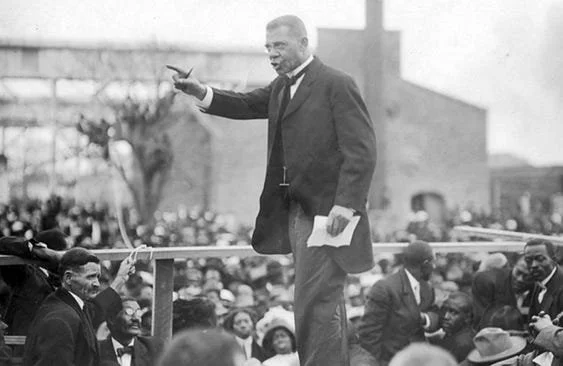

On September 18, 1895, at the Cotton States and International Exposition in Atlanta, Georgia, Booker T. Washington stepped to the podium and delivered a speech that would ripple through American history. Speaking to a mixed audience in the tense, post-Reconstruction South, his address, later named the “Atlanta Compromise”outlined a pragmatic, if deeply controversial, roadmap for Black progress in a nation still very much racially divided
What Was the Atlanta Compromise?
At its core, the Atlanta Compromise was Washington’s bold strategic bet: racial advancement through economic self-reliance and vocational excellence, rather than immediate demands for full political and social equality. He encouraged Black Southerners to focus on practical skills, agriculture, and industry right where they stood, while appealing to white Southerners and Northern philanthropists to invest in Black education and opportunity in exchange for social stability and acceptance of the segregated order.

The Parties Involved and Their Motivations
The compromise was a pact involving Booker T. Washington as the central Black voice, alongside white Southern moderates and Northern industrialists. White Southern leaders craved stability and a reliable labor force after the upheavals of Reconstruction and the ambitions of the “New South.” Northern philanthropists sought a productive Southern workforce without the friction of open racial conflict. Washington’s message of accommodation resonated because it prioritized cooperation over confrontation.

Booker T. Washington and W.E.B. Du Bois: Philosophies, Similarities, and Divergences
Booker T. Washington (1856 – 1915) rose from enslavement to become the founding president of Tuskegee Institute in Alabama. A masterful strategist and educator, he championed vocational training, economic self-help, and patient gradualism. In his view, by demonstrating undeniable value through skilled labor and hard work, African Americans could gradually earn respect and full citizenship.
W.E.B. Du Bois (1868 – 1963), the Harvard-trained sociologist, activist, and co-founder of the NAACP, offered a sharper counter-vision. Born free in Massachusetts, he championed the “Talented Tenth” – an educated Black elite tasked with leading the charge for immediate civil rights, voting access, and robust liberal arts education.
Similarities: Both were towering figures in Black education, fierce advocates for racial uplift, economic empowerment, and staunch opponents of lynching and violence. They shared a deep faith in self-reliance and the transformative power of learning.
Differences: Washington emphasized bottom-up economic progress and temporary accommodation to white supremacy. Du Bois demanded top-down political agitation, uncompromising insistence on constitutional rights, and higher education to cultivate visionary leaders. Their rivalry distilled a timeless tension: pragmatism versus idealism amid entrenched systemic racism.
The Creation and Funding of HBCUs
Historically Black Colleges and Universities (HBCUs) arose largely because Black Americans were barred from white institutions. While Cheyney University (founded in 1837) predated the Civil War, the explosion of HBCUs came during Reconstruction (1865 – 1877) to serve newly freed people. Religious groups like the American Missionary Association, Quakers, and various Methodist and Baptist organizations led the way, often aided by the Freedmen’s Bureau. The Second Morrill Act of 1890 bolstered them by mandating land-grant funding for Black institutions. Generous support from Northern industrialists such as Andrew Carnegie and John D. Rockefeller, combined with the tireless efforts of Black churches and communities, helped transform places like Tuskegee, Howard, and Atlanta University into vital hubs of teacher training and leadership.

Outcomes and Success of the Compromise
In the short term, the strategy was a win for Washington. It elevated him to national stardom, unlocked major philanthropic support for Tuskegee and other institutions, and delivered big gains in industrial and agricultural training for African Americans. White audiences embraced it eagerly.
Yet over the long haul, its limitations became painfully clear. It failed to halt the relentless march of Jim Crow laws, voter disenfranchisement, or continued racial violence of the era. Segregation as it turns out only strengthed itself in the decades after 1895, and true equality would require the full force of the Civil Rights Movement decades later.
Du Bois’ Growing Discontent
Initially somewhat sympathetic, Du Bois emerged as Washington’s most formidable critic. In The Souls of Black Folk (1903), he sharply condemned the Atlanta Compromise:

Du Bois argued that the approach traded away political power, civil rights, and higher education for uncertain economic crumbs, all while reinforcing notions of Black inferiority at a time when bolder resistance was desperately needed.
Remnants and Enduring Controversy
Echoes of the Atlanta Compromise still shape conversations around education, economic empowerment, and the merits of incremental versus radical change. Washington’s focus on vocational training inspired later self-help movements, while Du Bois’ activist blueprint profoundly influenced the NAACP and the modern civil rights struggle. HBCUs endure as powerful institutions, even as they continue to fight chronic underfunding.
The compromise remains polarizing: some see it as necessary realism in a brutally hostile era, others as a Faustian bargain that postponed justice. Critics decry its accommodationism; defenders credit it with laying essential institutional foundations when the odds seemed impossible. In today’s debates on racial equity, it stands as a cautionary tale about the painful trade-offs between short-term survival and long-term liberation.
Neither outright triumph nor complete failure, the Atlanta Compromise was very much a product of its moment an unsteady bridge between emancipation’s soaring promise and the long, unfinished march toward genuine equality that continues to this day.