What was up with The Beastie Boys and Tibet?
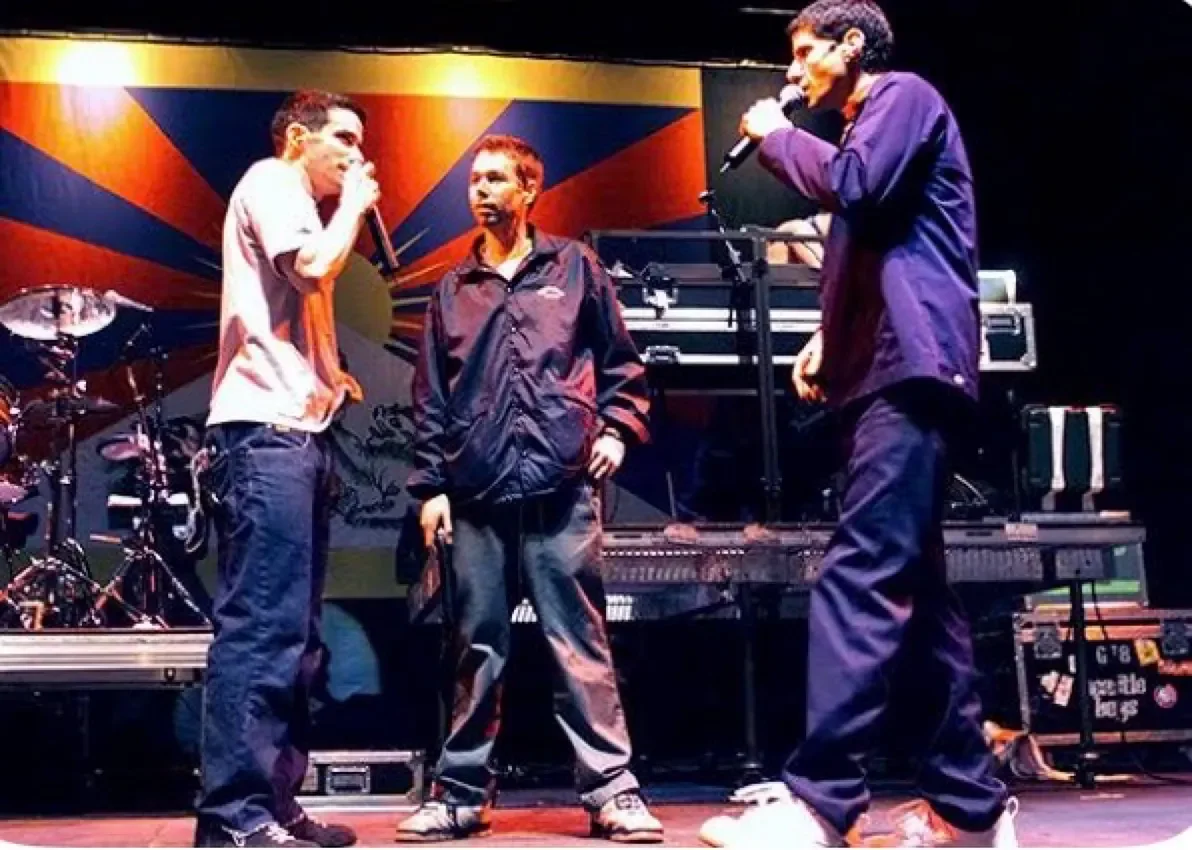
In early-1980s New York, three Jewish kids from middle-class Manhattan stumbled into a revolutionary new genre and emerged as legends. Mike D (Michael Diamond), Adam “MCA” Yauch, and Adam “Ad-Rock” Horovitz first crossed paths in the city’s punk scene, playing in the Young Aborigines, a quartet that performed in Lower East Side clubs. Yauch stepped in on bass when the original bassist left the group; Horovitz later picked up the guitar after the first guitarist departed. From the start, they exuded attitude and unshakeable confidence.
By 1983, a novelty track called “Cooky Puss” — half rap, half prank phone call to a Carvel ice cream shop created a local buzz. Its unexpected success convinced them that hip-hop was their future.
Rick Rubin, a young NYU student with ambitious production dreams, had just launched a fledgling label called Def Jam. Intrigued by their rock-rap hybrid background, Rubin convinced Russell Simmons to sign the group in 1983. That decision set their journey in motion. New York’s streets were alive with the beats of Run-DMC, the scratches of Grandmaster Flash, and the raw, sample-heavy energy of early hip-hop.
The Beastie Boys would put their guitars on the shelf and lose their original drummer, Kate Schellenbach. Instead they embraced a 808 drum machine, and fully committed themselves to becoming emcees.
White kids entering a predominantly Black art form could have been met with skepticism. Instead, the community embraced them. Touring with Run-DMC earned them genuine street credibility, while respected figures such as Chuck D, LL Cool J, Big Daddy Kane, and DJ Red Alert publicly vouched for their authenticity. They were never seen as culture vultures stealing flows; rather, they brought punk energy, irreverence, and real respect to the culture, blending genres with swagger and without apology.
Their discography traces a remarkable evolution from brash frat-house anthems to critically acclaimed “masterpieces”. Licensed to Ill (1986) provided the rocket fuel, delivering classics like “(You Gotta) Fight for Your Right (to Party!)” and “No Sleep Till Brooklyn.” It made them the first white rap act to top the Billboard charts, selling millions of copies even as many critics dismissed them as a passing novelty.. after all, plenty still believed rap itself was merely a fad. Then came Paul’s Boutique (1989), a unique, sample heavy classic that critics now rank among the greatest albums of all time, though it was a commercial disappointment upon release.
Check Your Head (1992) and Ill Communication (1994) introduced live instruments, jazz breaks, it showed a newfound musical maturity. Hello Nasty (1998) earned Grammys for Best Alternative Music Album and Best Rap Performance by a Duo or Group. Later works such as To the 5 Boroughs (2004) and Hot Sauce Committee Part Two (2011) continued their artistic evolution. They began to channel the spirit of Public Enemy, and grew into true innovators with something to say . Forever changing how rap could sound, while sampling and deliver a political message.
The most profound shift occurred in the mid-1990s, when MCA the group’s de facto leader underwent a deep personal awakening. While recording Ill Communication, he sampled Tibetan monks chanting on tracks such as “Shambala” and “Bodhisattva Vow.”
This sparked a trip to Nepal, where he met refugees fleeing Chinese occupation, followed by a five-day private teaching with the Dalai Lama in 1993. Yauch began to see powerful parallels between music and spiritual enlightenment, drawing particular inspiration from the 11th-century Tibetan saint Milarepa. He realized that fame could be more than self-indulgence.
Together with activist Erin Potts, he co-founded the Milarepa Fund, a nonprofit that directed royalties and concert proceeds toward the Free Tibet movement.
The cause was urgent. Since the 1950s, Tibet had endured brutal Chinese occupation: monasteries razed, monks and nuns tortured, and an entire ancient culture systematically suppressed. Yauch did not preach from a distance. He used the Beastie Boys’ platform for serious, nonviolent activism raising millions of dollars and dramatically increasing global awareness. The Tibetan Freedom Concerts, which launched in 1996 at San Francisco’s Golden Gate Park before a crowd of 100,000 and continued with international editions through 2001, became landmark events.
Featuring artists such as Björk, Rage Against the Machine, the Fugees, Sonic Youth, and U2, they felt like a principled alternative to the era’s more chaotic festivals. The concerts helped expand Students for a Free Tibet from 30 U.S. chapters to more than 650 worldwide. As Yauch famously remarked, “There’s a lot of crap reasons to be a rock star. This is the good one.” The Milarepa Fund continued its work long after the concerts ended, advancing human rights and Buddhist-inspired principles of peace. The Beastie Boys did not merely rap about justice, they lived it, transforming samples into solidarity and turning “resolution time” into action.
Today, the group’s story remains frozen in time. After MCA’s courageous battle with cancer ended in 2012, Mike D and Ad-Rock chose to disband the Beastie Boys out of respect for their brother’s wishes. There have been no reunions or new recordings under the name. Mike D has produced beats for artists including Portugal, Cibo Matto, and Mike Watt, while Ad-Rock has acted in independent films, remixed under aliases, and embraced life as a father.
In 2018, the surviving members released the acclaimed Beastie Boys Book, followed in 2020 by the Spike Jonze directed documentary Beastie Boys Story, along with several reissues that keep their catalog vibrant. Their legacy is eternal. No more mics will be passed between them, but their influence continues to echo in every rapper and activist who combines artistic innovation with a social conscience.
Their message very clear… Life, Health and fame can be fleeting, use your voice to help others. Even if it requires speaking to power
The bridge delivered by MCA on “The Update” on the Ill Communication album serves as manifesto and an inspiring remembrance of his life and vision:
“I know we can fix it and it’s not too late / I give respect to King and his nonviolent ways / I dream and I hope and I won’t forget / Someday I’m gonna visit on a free Tibet.”
#Beastieboys #Hiphop #Music #Grammy #FreeTibet
