David Bowie: The Chameleon Who Bridged Worlds
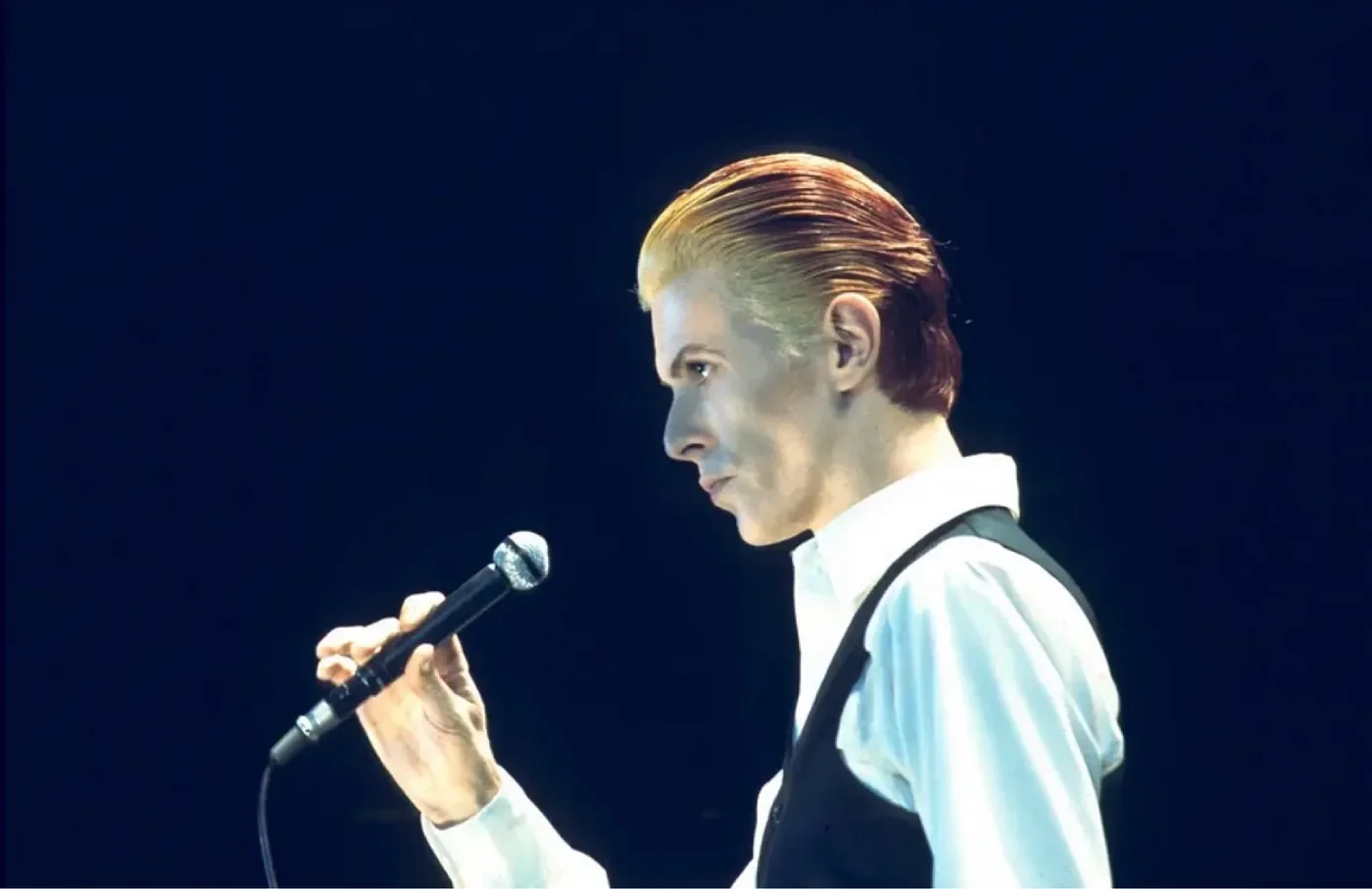
The 1970’s were a revolutionary decade for music, defined by bold experimentation and cultural fusion. From the rise of Funk and Disco to the blending of Rock with Jazz, Soul and other Global sounds, artists broke genre boundaries like never before. There was one Artist of this period who was the prototype.
David Robert Jones better known as David Bowie was born on January 8, 1947, in Brixton, South London, a working-class neighborhood still showing the blight of postwar Britain. His mother, Margaret Mary “Peggy” Burns, worked as a waitress at a local cinema; his father, Haywood Stenton “John” Jones, was a promotions officer for the children’s charity Barnardo’s. The family soon moved to the suburb of Bromley, where young David absorbed a mix of everyday British life and the vibrant American records his father brought home. That modest upbringing belied the. genius who would impact popular culture.
Bowie’s early musical beginnings forecasted his abilities. At age 13 he picked up the saxophone, inspired by the jazz scene in London’s West End. He played in early bands the Konrads, the King Bees, the Mannish Boys, the Lower Third performing in R&B clubs of the mid-1960s. His first single, “Liza Jane,” appeared in 1964 under the name Davie Jones. To avoid confusion with the Monkees’ Davy Jones, he adopted the stage name David Bowie in 1966. His 1967 debut album(Titled David Bowie) was mostly pop and folk, but it was the 1969 single “Space Oddity,” which timed with the Apollo 11 moon landing, that launched him into the spotlight. From the start, Bowie treated music as theater: a space for artists to reinvent themselves and to use fearless experimentation.
What truly set Bowie apart was his profound, lifelong reverence for Black American music particularly rhythm & blues and soul. As a boy in the late 1950s, he listened obsessively to 45s featuring Little Richard, Fats Domino, Frankie Lymon and the Teenagers, and the Platters. Hearing Little Richard’s “Tutti Frutti” felt, he said, like he had “heard God.” At around age eight he declared he wanted to be “a white Little Richard,” drawn to the music’s raw energy, emotional honesty, and subversive flair. He called R&B “the bedrock of all popular music” and returned to it again and again, covering Bobby “Blue” Bland’s “I Pity the Fool” as one of his earliest singles in 1965 and later creating more “plastic soul”(his term)of his 1975 hugely. Young Americans.
This love was never superficial. In 1974, while recording Young Americans at Sigma Sound Studios in Philadelphia, Bowie overheard a young singer named Luther Vandross rehearsing on a studio couch. He immediately hired Vandross as a backing vocalist and vocal arranger. Vandross co-wrote “Fascination” (adapted from his own “Funky Music (Is a Part of Me)”) and shaped the album’s deep, soulful sound. The two toured together on the “Philly Dogs/Soul Tour,” and Vandross appeared with Bowie on The Dick Cavett Show. Vandross later credited the experience as his big break, propelling him from session work to solo stardom. Bowie’s support was characteristic: he didn’t just borrow from Black artists he amplified them.
Bowie’s evolution was legendary and before its time. After glam-rock stardom as Ziggy Stardust (The Rise and Fall of Ziggy Stardust and the Spiders from Mars, 1972; Aladdin Sane, 1973), he plunged into soul and funk with Young Americans and Station to Station (1976), soon he moved to Berlin, it was there he was inspired to write the groundbreaking “Berlin Trilogy” (Low, “Heroes,” Lodger, 1977 — 79), where he created art-rock, natural atmospheric, and electronic sounds with Brian Eno(who would later produce Talking Heads, Devo,U2 and Coldplay among others) The 1980s brought him huge commercial success with Let’s Dance (1983), produced by Nile Rodgers.
Later decades saw him explore industrial rock (Outside, 1995), drum-and-bass (Earthling, 1997), and introspection with (The Next Day, 2013). Across 26 studio albums he remained a shape-shifter who never repeated himself.
His activism and outspokenness were equally consistent. In a moment that I will always remember and that has inspired me to push uncomfortable truth when it comes to injustice, during a January 1983 MTV interview while promoting Let’s Dance, Bowie confronted VJ Mark Goodman about the network’s glaring lack of racial diversity. “I’m just floored by the fact that there’s so few black artists featured on it,” he said. “Why is that?” Goodman offered excuses about “narrowcasting” and suggested Midwestern audiences might be “scared” of artists like Prince. Bowie pushed back, insisting Black teenagers were “part of America” too and that artists like Marvin Gaye and the Isley Brothers deserved airtime. The moment is widely credited with accelerating MTV’s inclusion of Michael Jackson, Prince, and other Black superstars, helping break the color barrier in 1980s music television.
The irony was unmistakable: a white British artist steeped in Black musical traditions was embraced by MTV and young white audiences while the originators of this sound were sidelined. Bowie himself highlighted this dynamic rather than benefiting from it silently. He had already crossed cultural lines in November 1975 when he appeared on Soul Train the 2nd white artist to do so(he would follow Elton John)performing “Fame” (his first U.S. No. 1, co-written with John Lennon and Carlos Alomar) and “Golden Years.” Nervous as he had ever been he admitted, he still delivered a memorable set that blended his glam unconventionality with deep respect for the soul audience.
Bowie’s career extended far beyond music. He was a gifted actor whose roles often mirrored his musical personas. His breakthrough came in Nicolas Roeg’s The Man Who Fell to Earth (1976), where he played the alien Thomas Jerome Newton with conviction. Other highlights included the goblin king Jareth in Labyrinth (1986), the vampire in The Hunger (1983), and Nikola Tesla in The Prestige (2006). He also appeared in Merry Christmas, Mr. Lawrence (1983), Absolute Beginners (1986), and cameos in films like Zoolander (2001). Onstage he studied mime with Lindsay Kemp and explored theater, always treating performance as total art.
Until the very end, Bowie kept creating. After a quiet decade following Reality (2003) and a few health scares, he returned in 2013 with the surprise album The Next Day. His final work, Blackstar, arrived on January 8, 2016, his 69th birthday. Recorded in secret while battling liver cancer (which was diagnosed 18 months earlier but kept private), the album was a jazzy farewell that critics saw as a masterpiece. Two days later, on January 10, 2016, Bowie died peacefully in New York City, surrounded by family. As to his wishes, there was no funeral; his ashes were scattered in a Buddhist ceremony in Bali.
David Bowie’s life was a masterclass in curiosity, empathy, and courage. He drew deeply from Black innovators, Little Richard, Luther Vandross, the entire soul tradition, then used his immense platform to champion them when others would not. Whether as Ziggy, the Thin White Duke, or the slowly declining artist behind Blackstar, he showed that true artistry means constant evolution, fearless honesty, and lifting others along the way. In an industry too often marked by appropriation, Bowie stood out as a respectful collaborator and outspoken ally. His music still sounds like tomorrow, and his example of creativity without boundaries and solidarity across color lines remains urgently relevant. Always evolving… The talent, persistent resiliency, ability to morph and reinvent himself combined with his quiet dignity to his end is what I admired most about the man.
