Andrew Painter: The Phillies’ Future Anchor (and Why He’s Struggling Right Now)
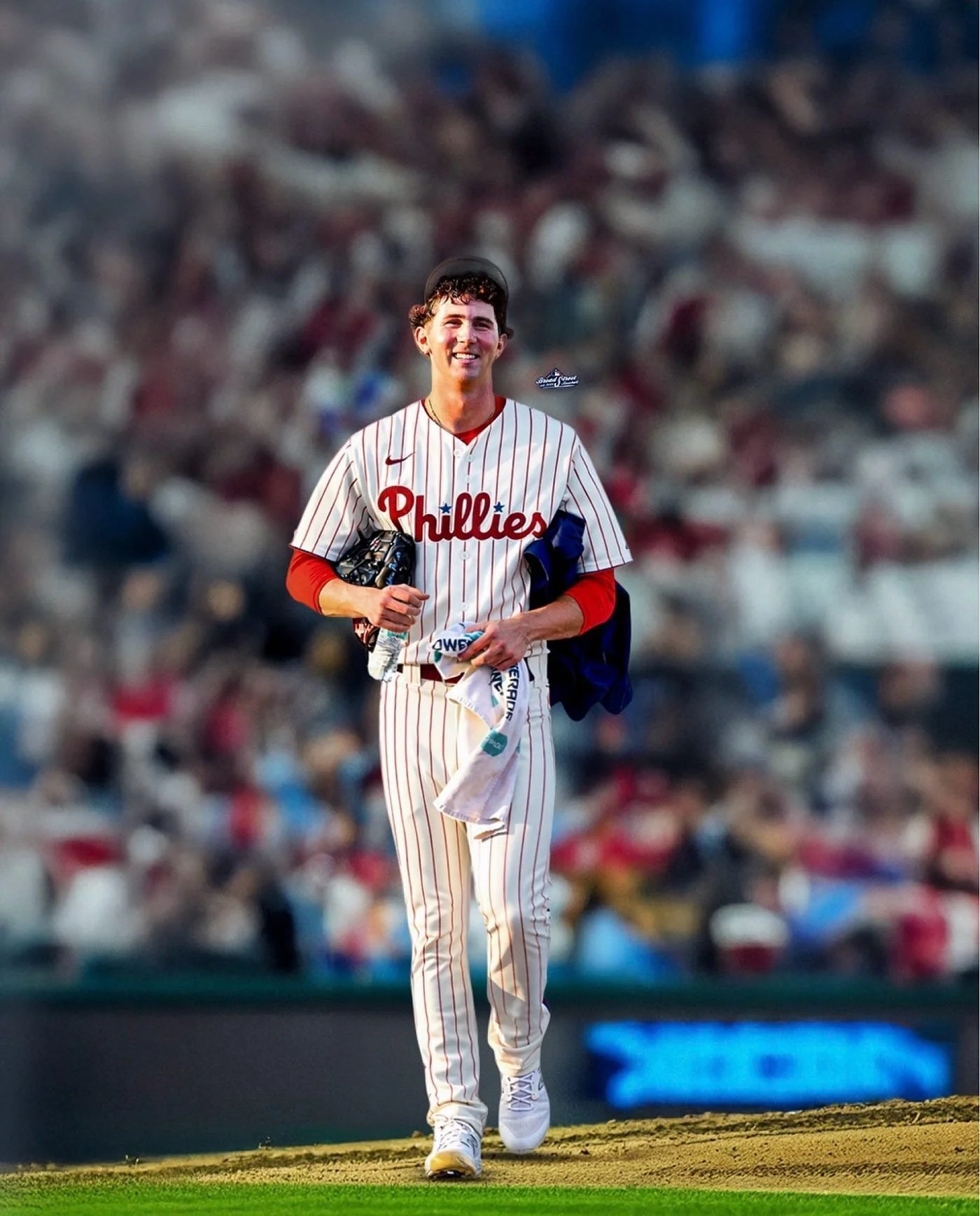

Andrew Painter: The Phillies’ Future Anchor (and Why He’s Struggling Right Now)
Andrew Painter was born in 2003 and came out of Calvary Christian Academy in Fort Lauderdale as one of the best high school arms in the country. The Phillies took. the 6’7” right-hander with the 13th overall pick in the 2021 MLB Draft and handed him a $3.9 million signing bonus. He breezed through the minors in 2022, flashing electric stuff and polish that teenagers rarely possess. Then Tommy John surgery in 2023 and recovery cost him. two full seasons. He returned in 2025 (mostly at Triple-A Lehigh Valley) and made his big-league debut in 2026 at age 23.
Pre-Draft Scouting Buzz
Scouts were extremely excited about him. They loved the frame, arm strength, advanced feel for pitching, and a legitimate four-pitch arsenal: fastball, curveball, slider, and changeup. He sat low-to-mid-90s with room to add velocity, showed plus projection on his breaking balls, and most impressively he pounded the strike zone. The consensus was high-floor, high-ceiling starter with at least mid-rotation potential and legitimate ace upside if it all clicked. Polished, athletic, and a natural strike-thrower.
Traditional Stats Snapshot (2025 — 2026)
- 2025 (mostly Triple-A): 118 IP, 5.26 ERA, 123 strikeouts. The strikeouts were solid, but too many walks and homers pushed his WHIP to 1.49 and opponents hit .276.
- • 2026 (MLB, early 32 — 33 IP across 7 appearances): 1–4 record, 6.89 ERA, 30 K, 12 BB, 1.71 WHIP, .321 opponent average.
He’s shown flashes eight strikeouts in 5.1 innings in his first and best start on March 31st, but consistency has been hard to find. On paper, it looks rough: a young pitcher scuffling in his first real taste of the majors.
What the Advanced Metrics Actually Say
This is where things get more encouraging.
- xERA (4.02): Suggests his ERA is inflated by bad luck and he isn’t being helped by team defense
- • Exit velocity and hard-hit rate: Sitting in the 75th — 80th percentile range decent stuff for a post-TJ pitcher facing big-league hitters.
- • BABIP: Elevated, meaning more balls in play have been finding holes than they probably should.
- • K%: Down from pre-injury, which is understandable when you’re suddenly facing the best hitters on the planet.
Bottom line: the stuff and ability to limit hard contact are still there. His ERA looks ugly, but the controllable skills point to positive regression. Remember, this is a kid who missed two full seasons. Post-Tommy John command and feel often take a good two years to fully return and he’s still learning how to navigate major-league lineups. Small body of work plus poor defense can be fairly misleading.

What’s Actually Going On?
Big-league hitters punish missed spots (shocking, I know). Two years off means lost reps, mechanical adjustments, and command that doesn’t always snap back on schedule. At 6’7”, repeating your delivery is its own full-time job. He’s also dealt with some migraine issues, which certainly haven’t helped. The good news? His velocity and raw stuff haven’t disappeared, they’re just not quite synced up yet.
How He Fixes It
Targeted bullpen work to sharpen command. Lean harder on that developing changeup and his tight slider/curveball to generate more weak contact and whiffs. Keep building innings while staying healthy. Experience and repetition should eventually close the gap between his stuff and the current results we are seeing.
Comparisons, Ceiling, Floor & Long-Term Value
Painter draws natural comparisons to big, power right-handers like Justin Verlander, similar arsenal and polish.
Ceiling: True No. 1/No. 2 starter with ace potential: plus-plus velocity, multiple plus secondaries, and the ability to eat up innings.
Floor: Back-end starter or high-leverage reliever if command never fully returns.
Big bodies can be durability wildcards, and post-TJ inconsistency is real. Still, as a pre-arbitration, cost-controlled arm with frontline upside, the Phillies have every reason to be patient. He already carries significant value, and if he breaks out, we’re talking multi-year control worth tens of millions.
Final Take
At 23, Andrew Painter is still very much a work in progress but the ingredients for stardom are absolutely intact. The advanced metrics say there are better days ahead, and his pre-injury dominance was not a mirage. With continued health and continued development of his feel, he’s on track for a very strong major-league career. If (and yes, it’s a big if) he stays healthy, I’m genuinely bullish on his potential at the front of a rotation.