Knowing your competition Part 2
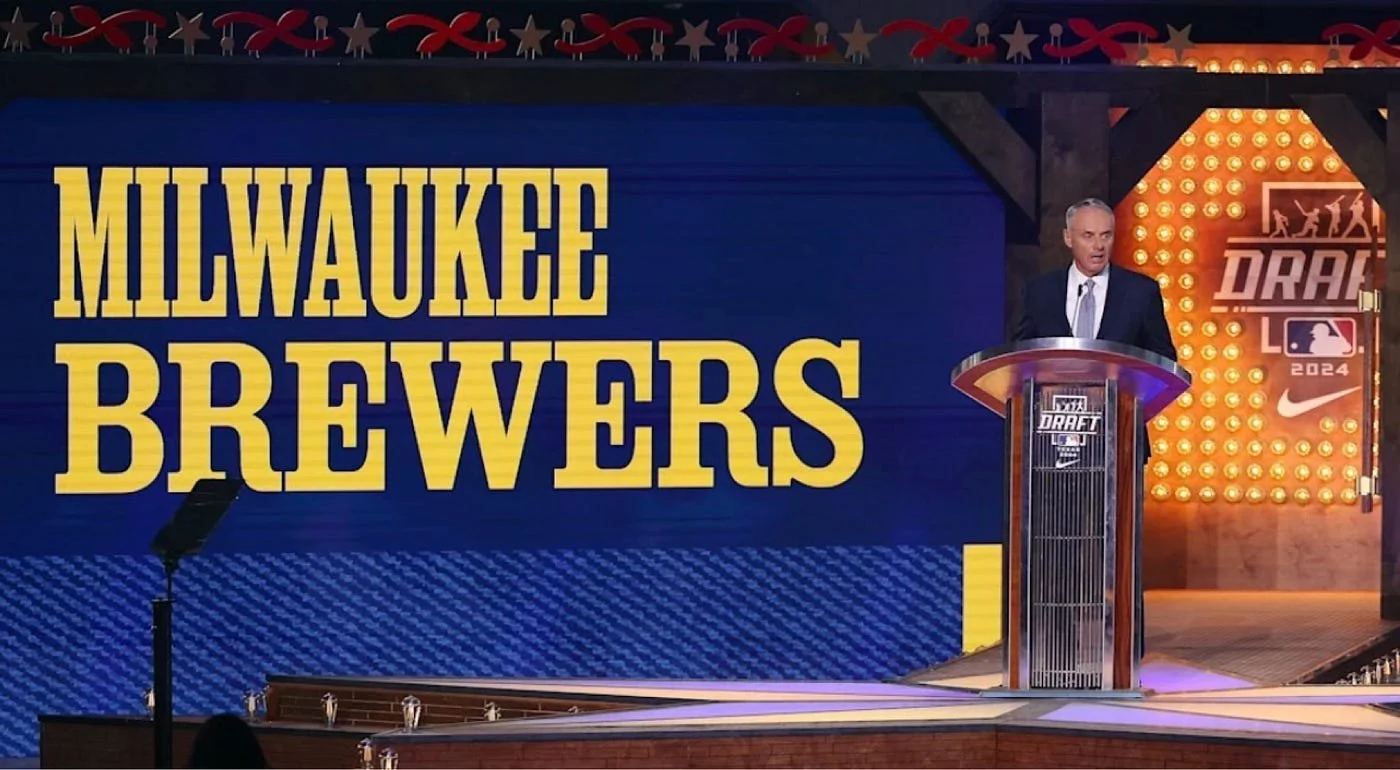

Milwaukee Brewers
Knowing your competition
During the 2025 MLB Amateur Draft, teams as always took different approaches tailored to their specific organizational needs.
Examining the recent draft strategies of Major League organizations is a great exercise. By understanding the types of players your opponents tend to target and how highly they prioritize them, you as a competing organization can better anticipate who is most likely to be interested in the players you covet. That knowledge factors into the calculus of where and when you need to target certain players. Unlike drafts in other major North American sports, MLB rules prohibit trades involving draft picks during the event itself.
The Milwaukee Brewers came into. the 2025 MLB Amateur Draft with a bonus pool of $13,138,100 (10th-largest in MLB). Their early selections, including the No. 20 overall pick (Andrew Fischer, 1B/3B from Tennessee) and a comp first-rounder at No. 32 (Brady Ebel, SS/3B from Corona HS, CA, they received for Willy Adames signing with San Francisco). Other Day 1 picks came at No. 59 (J.D. Thompson, LHP, Vanderbilt), No. 68 (Frank Cairone, LHP, Delsea Regional HS, NJ), and No. 94 (Jacob Morrison, RHP, Coastal Carolina).
They signed 17 of 22 selections. Early reported bonuses included:
- Fischer: $3.5M (under the $4.268M slot, saving $768K)
- • Ebel: $2.75M (under the $2.971M slot, saving $221K)
- • Thompson: $1.56M (at slot)
- • Cairone: $1.098M (under the $1.254M slot)
The pattern of going under slot on top picks (especially for the college players Fischer) freed money that allowed them to be aggressive over-slot or near slot drafts later, which they used on high school players. I couldn’t find the final spending figures publicly beyond the early rounds, but the Brewers stayed within their pool while seeming to prioritize talent over staying true to slot value.

Draft Strategy and What Made It Unique
The Brewers’ strategy emphasized high school players (12 of 20+ selections), with more HS picks on Day 2 than any other team in the entire draft. This continued trend of several years “zigging while others zag,” heavily targeting high school arms and athletic position players rather than strictly following the consensus “best player available” board. They blended this with targeted college selections for floor (Fischer’s polished hitting profile, Thompson’s strikeout stuff).
Key elements:
- HS-heavy approach, especially pitchers and infielders/outfielders with athleticism and projection.
- • Saving slot money early to jump on talented “tough signs” later (Day 2 HS right-hander Joshua Flores from Lake Central HS, IN their third straight year drafting from that particular program).
- a focus on toolsy, projectable players who fit their player-development program, which has a track record of developing high schoolers into contributors ( like Jacob Misiorowski).
- • They are balanced but not overly cautious: College bats/arms for immediate organizational depth, HS for long-term upside.
What made it unique was the volume of high school selections during a draft where many teams leaned college for quicker returns. The Brewers leaned into risk/reward with prep talent, including multiple cold-weather or under-the-radar arms and infielders. Their Day 2 emphasis on HS players stood out.
A clear pattern has emerged, they appear driven by:
- Scouting relationships and area knowledge (e.g., repeated Lake Central HS picks, strong prep lefty focus).
- • Developmental confidence: Milwaukee’s system excels at refining raw arms and hitters.
- • Market constraints: As a smaller-market club, they maximize value by investing in high-ceiling talent that bigger clubs might pass on due to signability or immediate needs.
- • Under-slot savings on Day 1 to enable flexibility.
Player Evaluations
Most talented overall: Andrew Fischer (1st round, Tennessee) stands out as the most polished and complete hitter in the class. He has a track record of performance across conferences, with a mature approach, consistent hard contact, and power potential at the corners. Many viewed him as one of the stronger college bats available, providing a high-floor.
Most underrated: Daniel Dickinson (6th round, LSU) drew interest as a potential second-round talent who slid. Scouts like his contact-oriented profile and defense. at shortstop; some called him a potential “jackpot” or big value add for the system.
Highest ceiling: Brady Ebel (compensatory 1st round, HS SS/3B) or certain HS arms like Joshua Flores or Frank Cairone. Ebel, a toolsy infielder from a famous Corona HS program, offers athleticism, projection, and upside as a potential impact defender/hitter. HS arms carry boom potential due to their youth and raw stuff (e.g., Flores’ hammer curveball). The Brewers’ HS-heavy tilt towards ceilings over floors.
Lowest ceiling: Later-round or older college selections like Jacob Morrison (3rd round, RHP, Coastal Carolina) or certain senior signs carry more “organizational depth” profiles with lower projection — solid but less likely to become stars due to age, limited upside, or injury history.
Alignment with Last 5 Years (2021 — 2024)
This 2025 class aligned closely with recent Brewers drafts:
- Consistent HS emphasis, especially pitchers (they’ve led or ranked high in prep arm selections in recent cycles).
- • Preference for athletic, projectable talent over safe college seniors.
- • Success in finding value on Day 2 and beyond (past breakouts like Tyson Hardin or Braylon Payne).
- • Mix of college hitters for polish and HS for upside, reflecting a belief in their development pipeline rather than “best player available”.
- • Earlier classes (e.g., 2022’s Jacob Misiorowski at pick 63, 2024’s Braylon Payne) show the same willingness to reach for toolsy HS or mid-round type
They’ve recently produced current contributors (Sal Frelick, etc.) and built one of baseball’s stronger farm systems through this patient, development-focused model, though results vary with the risk of HS-heavy strategies.
Outlook and Industry Perceptions Going Forward
Industry views are generally positive. Analysts highlighted the value in Fischer as a strong college bat, Ebel’s tools, and later picks with talent like Dickinson. The high school heavy volume was seen as very bold but fitting for Milwaukee’s identity.
The hope for this class is a mix of quick organizational depth from the college pieces (Fischer, Thompson) and long-term impact from the HS group. With the Brewers’ strong player development the outlook is optimistic for several to climb the system, potentially multiple big-league contributors in 3 — 5 years. Risks include the typical HS attrition rate and injury concerns (some arms had prior issues), but the strategy positions them well.
Overall, 2025 reinforced the Brewers reputation as draft innovators who prioritize upside and internal development over the conventional, it’s an approach that has helped them remain competitive despite their payroll limits. Early returns but the class looks like a nice extension of their successful recent blueprint.