Knowing your Competition
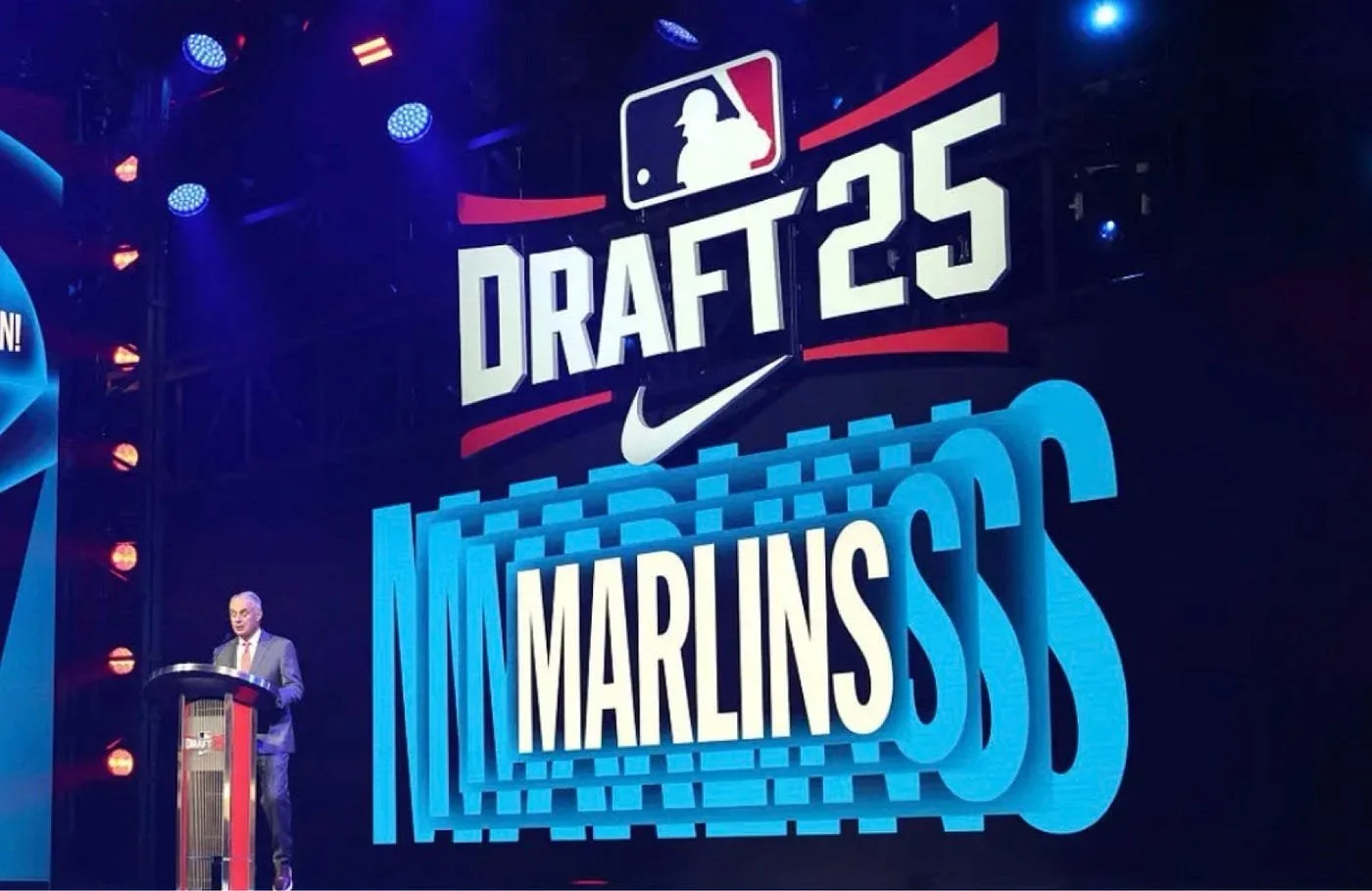

Knowing your competition
During the 2025 MLB Amateur Draft, teams as always took different approaches tailored to their specific organizational needs.
Examining the recent draft strategies of Major League organizations is a great exercise. By understanding the types of players your opponents tend to target and how highly they prioritize them, you as a competing organization can better anticipate who is most likely to be interested in the players you covet. That knowledge factors into the calculus of where and when you need to target certain players. Unlike drafts in other major North American sports, MLB rules prohibit trades involving draft picks during the event itself.
I studied three examples (the Miami Marlins, Milwaukee Brewers, and the Athletics), each with very different but distinct models that shaped their selections.
Today a look at the Miami Marlins’ 2025 MLB Amateur Draft, based on available reporting, video, and industry evaluations as of early 2026.
Draft Strategy
The Marlins entered the draft with the 7th overall pick (via lottery) and a clear emphasis on value and high-floor college talent. They prioritized safe, productive, impactful major leaguers over raw upside or filling specific positional needs.
The entire class consisted of college players — all 21 signed draftees came from NCAA programs. This approach favored polished players who could move quickly through the system, aligning with Miami’s need for offensive help and organizational depth during their rebuild. They targeted hitters with strong contact skills and power potential early, then mixed in arms and additional position players.
Their decisions followed a “best player available” philosophy while still emphasizing value. They selected consensus high-upside college bats who slipped or fit their board, often at or near slot value. They saved money in the middle rounds to stay under their pool limits. The complete focus on college players reflected a clear preference for lower risk and faster development timelines rather than higher-risk high school profiles.
What Made the Draft Unique?
The most striking feature was the complete absence of high school players a very rare strategy in modern drafts, especially for a team with a large bonus pool. While most teams mix in high school talent for ceiling, Miami went all in on college players.

They landed two strong early picks: a top college position player at No. 7 (Aiva Arquette) and a good value selection in Competitive Balance Round A (Cam Cannarella). The class heavily featured outfielders and infielders early, followed by a balanced mix of right- and left-handed arms later. Early returns have been encouraging, with several draftees already advancing to full-season affiliates by 2026, highlighting the polished nature of the group.
Bonus Pool and Spending
The Marlins received a bonus pool of $15,187,400 (7th-highest in MLB that year) and could spend up to 105% ($15,946,770) without forfeiting future picks. They signed all 21 selections. Key early signings included:
- Round 1, Pick 7: Aiva Arquette (SS, Oregon State) — $7,149,900 (exact slot)
- • Competitive Balance A, Pick 43: Cam Cannarella (OF, Clemson) — $2,277,425 (slightly over slot)
- • Round 2, Pick 46: Brandon Compton (OF, Arizona State) — $2,000,000 (under slot)
- • Round 3: Max Williams (OF, Florida State) — $897,500 (under slot)
2025 Bonus Pool Strategy
The Marlins signed several players under slot in the early rounds (Rounds 2 — 4) to offset over-slot signings in later rounds (Rounds 7 and 9). Overall, they stayed easily under their pool, avoiding any penalties.
Most Talented Player Selected
Aiva Arquette (SS/3B, Oregon State, 1st round) is viewed as the most talented player in the class. At 6’5”, 220 pounds, he was considered as the consensus top college position player in the draft despite some injury history. He posted strong draft year numbers at Oregon State (.354, 19 HR) and projects as a solid average hitter with 20–25 home run potential. Scouts were impressed with his range at shortstop given his size, though many project a long-term shift to third base. I agree, though I would like to see him play his way off the position. He immediately entered the organization as one of the Marlins’ top prospects. So far, his in-game power has yet to translate. This is something to monitor going forward.
Most Underrated Player
Cam Cannarella (OF, Clemson, Competitive Balance A) has frequently been repeatedly mentioned as their best value pick. He entered the year as a potential top-5 talent but saw his stock drop after a shoulder injury. The Marlins selected him at 43 overall and signed him for just over slot. If he returns to his pre-injury freshman form, many believe he could be a steal, thanks to his advanced bat-to-ball skills and athleticism. Early professional reports have been encouraging: he is hitting .368/.440/.579 (1.019 OPS) after his first seven games.
Player with Highest Ceiling
Aiva Arquette again leads the way in terms of pure talent and power upside. The combination of size, bat speed, and athleticism gives him the highest offensive ceiling in the class, with potential for plus hitting and average-to-plus power. Some scouts believe his tools could translate to impact-level production if he stays healthy and refines his approach. While a few later-round arms or position players carry rawer upside, Arquette’s profile offers the most well-rounded skill set with star potential.
Among the signed players, later-round college seniors and “safe” organizational types — such as polished but limited-tools pitchers or utility infielders project with the lowest ceilings. These players are typically viewed as depth pieces or potential 4A/organizational players rather than everyday big leaguers. High-floor, low-upside college relievers and contact-oriented bats without much power or speed projection often fall into this category.
Alignment with Drafts of the Last 5 Years (2021 — 2025)
The 2025 draft showed a clear shift toward a college-heavy, value driven approach. In prior years, the Marlins had mixed high school and college players, often chasing upside in prep arms and hitters while balancing with polished college players. Recent drafts showed a pattern of taking high schoolers for ceiling (especially pitching) alongside college bats for floor. The all-college 2025 class feels safer, likely reflecting a desire for quicker contributions during their rebuild. It continued the organization’s focus on “best value.” Overall, it fits the Marlins’ long-term plans of building depth while searching for impact bats.
Outlook and Hope Going Forward
Industry views on the 2025 class are cautiously positive. Draft analysts like the high-floor approach to the group. Many players reached full-season ball quickly, adding depth to a farm system that is improving.
Aiva Arquette and Cam Cannarella could provide the class with two potential future regulars or better, supplying much-needed bats to the system. The polished college approach suggests several players could reach the majors by 2027 — 2028 to help the rebuilding Marlins.
That said, the lack of high-upside high school players means the class may not produce multiple stars. It is viewed more as a solid depth-adding year than one that will elevate the organization to another level. Early 2026 assignments showed steady progress without any potential star type acceleration. The hope is that Arquette develops into a middle-of-the-order bat, Cannarella provides on-base and power value, and the rest of the class fills out the system with reliable role players.
Overall, this draft fits the Marlins’ patient, rebuild-focused strategy. It won’t immediately turn the franchise around, but it adds meaningful depth to a farm system that has quietly improved and gives the front office more trade options. Success will ultimately depend on health, development, and how well these players translate to professional baseball.
Next time, a look at an organization that took nearly the opposite risk/reward approach.